What is neo-pharma?
Neo-pharma is a ground-up pharmaceutical model in which drug-discovery capability is built into a scalable AI system. It connects target discovery, therapeutic discovery and clinical forecasting to run large, multiplexed campaigns across an owned portfolio. Relevant findings inform the next decision across campaigns, allowing discovery capacity to expand without building a separate organisation around every programme.

Proteus One is the architecture we are building for this model. Our ambition is general intelligence for drug discovery, with specialised systems that can reason independently and share what they learn across a portfolio.
Many campaigns.
One intelligence.
A programme may be waiting for cells to grow while another is selecting a target and a third is redesigning a molecule. Multiplexing coordinates these different clocks, so work advances and evidence returns across the portfolio continuously.
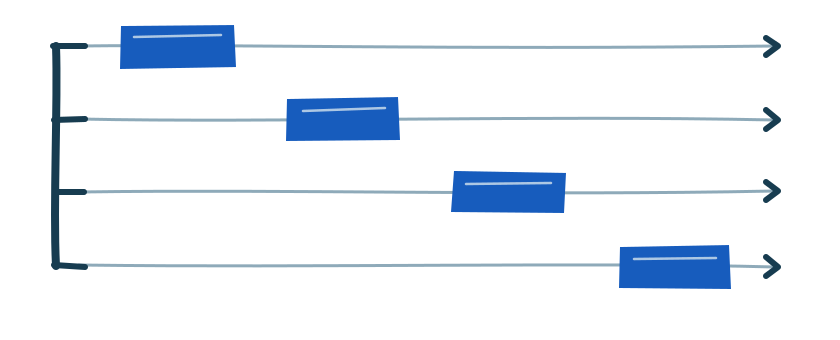
AI makes a different operating model possible. A common intelligence can carry the therapeutic objective, coordinate experiments and interpret results across many campaigns at once. Programme capacity can expand without creating a separate team and a separate memory for every asset.
That is horizontal scale in neo pharma. Biological experiments and clinical outcomes still take time. The ambition is to pursue more therapeutic possibilities, make more of each result and bring smaller patient populations within reach.
Three areas of intelligence, one research direction.
We are developing three specialist intelligences that share objectives and evidence. What one learns can change what another targets, designs or forecasts.
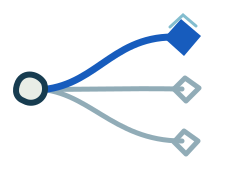
Asclepius
Target discovery
Where should we intervene?
Connect disease evidence to a target hypothesis. Let experimental findings challenge the choice.

Proteus
Therapeutic discovery
What should we build?
Design and evaluate candidates against that objective. Use experimental results to guide the next design.
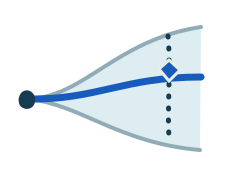
Pythia
Clinical forecasting
What would success require?
Explore how patient populations, endpoints and study assumptions affect possible outcomes. Keep uncertainty visible.
Each experiment should change what happens next.
A therapeutic programme starts with assumptions: that a target matters in a disease, that a molecule can affect it, and that doing so could help a defined patient population. Those assumptions need to be tested.
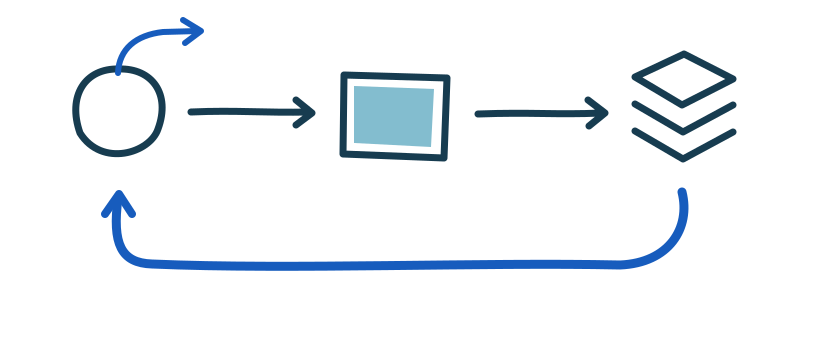
In the company we are building, research results return to the decisions that produced them. A finding about a candidate can lead to a new design, a different experiment or a revision of the target hypothesis. Clinical questions can change what the research team chooses to measure.
Keeping the evidence connected also means retaining uncertainty. Experimental findings, predictions and assumptions need to remain distinguishable as a programme develops.
Where we are today.
Proteus One’s connected architecture is in development. Asclepius, Proteus and Pythia describe the roles we are building across target discovery, therapeutic discovery and clinical forecasting.
Our starting priorities are undruggable targets, rare diseases and N-1 therapeutics. Our focuses set out the research direction.
Questions about neo pharma
What is neo-pharma?
Neo-pharma is a ground-up pharmaceutical model in which drug-discovery capability is built into a scalable AI system. It connects target discovery, therapeutic discovery and clinical forecasting to run large, multiplexed campaigns across an owned portfolio. Relevant findings inform the next decision across campaigns, allowing discovery capacity to expand without building a separate organisation around every programme.
How does neo pharma relate to AI drug discovery?
Neo pharma describes how the pharmaceutical company is built. Its scalable AI system is the core discovery capability, connecting target selection, therapeutic design, experiments and clinical reasoning across concurrent campaigns. At Proteus, the ambition is general intelligence for drug discovery, developed through experience across an owned portfolio.
What are multiplexed therapeutic campaigns?
Multiplexing means running many campaigns at different stages through a shared intelligence. While one experiment is running, another campaign can be designing candidates and another interpreting results. Evidence returns across the portfolio continuously, and relevant findings can improve the next decision in more than one programme.
What does horizontal scale mean for a drug company?
It means expanding the number of therapeutic programmes the company can pursue without increasing programme teams in the same proportion. AI coordinates research across targets, modalities and experimental partners. Biology still takes time; the opportunity is to overlap more work and make each result useful across the portfolio. This is the operating model we are building.
What is Proteus One?
Proteus One is the intelligence architecture we are developing for this model. Asclepius focuses on target discovery, Proteus on therapeutic discovery and Pythia on clinical forecasting. Each system has a distinct role and can pursue questions independently, while shared objectives, evidence and experimental feedback connect their decisions. The connected architecture is in development.
Where do experiments fit?
Experiments test the biological and therapeutic hypotheses. In the model we are building, their results inform subsequent designs, target choices and clinical questions. A prediction remains a hypothesis until it has the evidence needed to support it.
What is Proteus working towards?
Our starting priorities are undruggable targets, rare diseases and N-1 therapeutics. These focuses guide the discovery capability and campaigns we are building.
Reference this definition.
Proteus Bio’s definition places drug-discovery capability in a scalable AI system from the outset, connecting multiplexed campaigns, experimental learning and horizontal scale in one pharmaceutical model.
Reference this definition at proteusbio.ai/neo-pharma/.